


 NET Roundtables
Second Unit …… A crew that works in parallel, unsupervised, on a defined brief. The industry has always had one. This one reports to you.
AI – Your team is already using it. Your vendors are already billing for it. HPA NET event brings department heads and facility leadership into a hands-on session where they will be discussing the “how”.
Organized by functions, not by product: directing a software collaborator, composing a workflow, deploying an unattended worker, integrating with the systems you already run, building the quality gates that make output defensible to a client, and modeling what it actually costs at volume. No slideware, no futurism, no vendor pitch. You will touch every layer yourself and leave knowing what is production ready today, what is still a demo, and what it means for your budget and your staffing plan.
Networking Education Technology: NET Roundtables
- Tuesday, October 6, 2026
- 4:30 pm – 7:00 pm
This is a pre-paid event
- HPA Members – $60
- Non-Members – $90
- Not a member? Join now!
- Moderators coming soon
Sheraton Universal
- Starview Room
- 333 Universal Hollywood Dr, Universal City, CA 91608
Topic: Directing the AI Second Unit: A Human-Controlled Workflow, Tested in the Field
(co-moderated by Clyde Bessey, Origin Point & Jason Kunke, Cinetech)
Technology changes. Intention doesn’t. Audiences ultimately experience the work, not the toolchain behind it. This table treats AI not as the source of creativity, but as infrastructure around the creative process, with the human staying firmly in control at every stage.
Participants will work through a live AI-assisted production workflow using a sample scripted scene, seeing how shared project context moves through script breakdown, shot planning, storyboards, scheduling, call sheets, and production Q&A, while reviewing, redirecting, and challenging the AI at each step. The focus is practical delegation, human oversight, and quality control, not autonomous decision-making.
Alongside that live workflow, filmmaker Clyde Bessey shares an honest field report from two real productions at opposite ends of the spectrum: a five-minute immersive graphics piece for a major beauty brand’s live event, where AI-assisted workflows sped up visual iteration, music-driven editorial, multi-screen design, and high-resolution delivery; and Green Thumb, an upcoming live-action short using similar tools for previs, shot exploration, blocking, and production prep before the crew steps on set. In both cases, creative direction, taste, and final decisions stayed human. He’ll also touch on connecting that work into a shared production environment so it stays tied to the project instead of scattered across tools, and on unexpected uses like AI-assisted coding to build custom interactive experiences.
Together, the two halves give attendees both the in-the-weeds mechanics of directing an AI second unit and the real-world proof of what that looks like on an actual shoot, warts and all.
Clyde Bessey
Origin Point
Clyde Bessey is a filmmaker, creative director, and founder of Origin Point. After beginning his career at RED Digital Cinema, he went on to direct and produce work for brands and organizations including Netflix, Sephora, Adobe, Frame.io, and MovieLabs. His work explores how emerging technology can support stronger, more connected creative workflows. Jason is the co-founder of Cinetech, an AI-powered platform designed to streamline film and video production workflows. His background spans professional cinema camera systems, visual effects, camera work, technical workflows, and independent film production, including years working with Panavision and supporting filmmakers and production professionals with cinema camera systems and related technologies.
Jason Kunke
Cinetech
Today, Jason works alongside Cinetech co-founder and brother, Tim, developing practical AI-assisted tools for script analysis, visualization, shot planning, scheduling, call sheets, production collaboration, and project-aware assistance. Their focus is on using AI to simplify production workflows while keeping creative and operational decisions firmly in human hands.
Matt Celia
Lightsail VR
Topic: The New Production Supervisor – local AI solution to help power the business
Solving how a small team can increase their efficiency by using fully private local AI to help keep production teams on track.
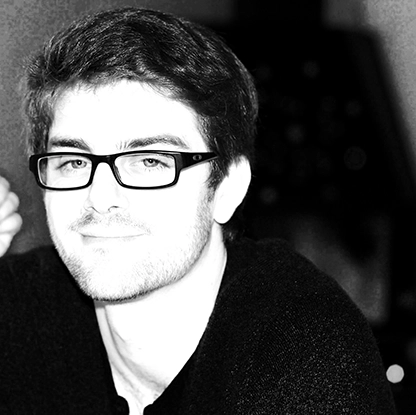
Alex Daro
Treza Labs
Topic: Running a Second Unit: Compose, Gate, and Cost an Unattended AI Pipeline
Attendees sit down at a node canvas and complete a working media pipeline themselves. They wire generation and delivery nodes, attach an automated vision QC gate and watch it reject a flawed shot before it ships, put the pipeline on a schedule so it runs unattended, and read the real per-unit cost before committing a run. We close each rotation with honest numbers from running this daily, including what still fails and what human review we keep.
Alex Daro is the founder of Treza Labs, where his team builds AI pipeline tooling for media production. He spent 15 years developing production systems and pipelines in Hollywood, including work at Marvel Studios, Digital Domain, and Company 3, before founding Treza. Treza lets teams compose workflows on a visual canvas, chaining the latest models into production pipelines with built-in quality gates, scheduling, and cost estimation. Treza is built for studios and facilities integrating AI work into real production pipelines.
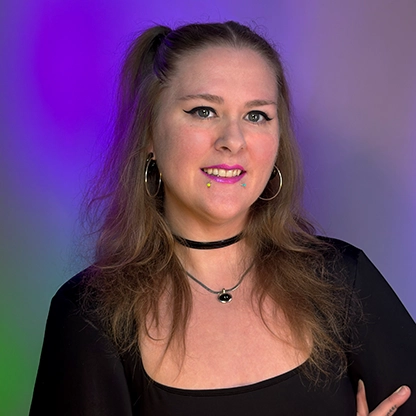
Dee Wassell
Women in Post
Topic: AI-Assisted Compliance – Watching Every Frame So You Don’t Have To
(presented by Women in Post)
Compliance review is slow, expensive, and still mostly manual. This station demos a multimodal AI pipeline that reasons across picture, audio, and editorial context to output a frame-accurate CSV of every S&P and R&C flag by jurisdiction, ready for a reviewer to action without watching a single frame. Pick a broadcast territory (FCC, OFCOM, ARPP, CRTC) and watch it work. Think of this as the floor, not the ceiling: the same models and tools extend into every upstream and downstream process, putting AI on task for the repetitive work and keeping humans in the loop for the decisions and remediations that matter.
Dee Wassell is a creative media technologist, post producer, and editor with 15+ years across post-production and technology. She’s led global technology operations for various companies and clients, and worked hands-on as post producer and video editor on projects like Interior Design Magazine’s Hall of Fame awards videos. These days she’s building AI tools from scratch, putting AI on the repetitive, time-consuming work so editorial, compliance, and operations teams get their time back. Compliance is just the first problem on the list, and she plans to keep building.
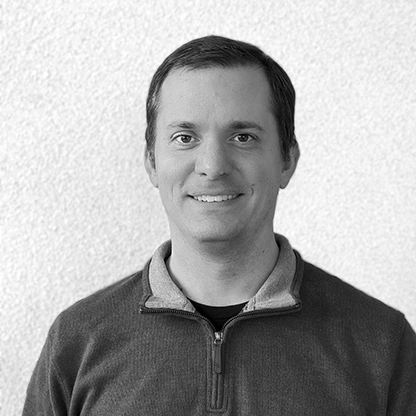
Peter Postma
FilmLight Ltd
Topic: See Your Delivery Before You Render It, From Any Browser
See how to take control of the original camera files, VFX plates, IMF, DCPs, and other critical media across your facility and cloud storage — and manage, organize, and deliver it all from one place.
Peter Postma is Managing Director of the Americas at FilmLight, developing color grading and image management tools that are used in motion picture productions of all sizes. Previously Peter worked as a systems engineer at Eastman Kodak helping pioneer digital intermediate technology. Peter has taught seminars around the world on color management for production and post-production and holds a BFA in Film and Animation from Rochester Institute of Technology.
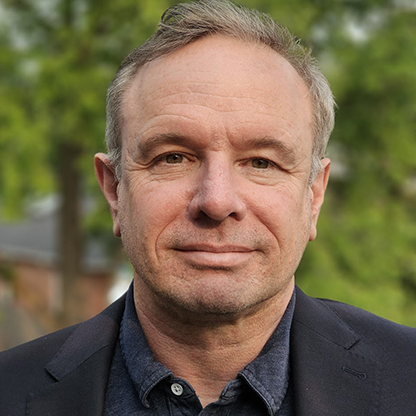
Paul Judkins
Integrated Media Technologies, Inc.
Topic: Production Intelligence using AI Connected to AWS Cloud Studio Resources
The IMT Production Intelligence solution connects an LLM to production resources such as ShotGrid, iconik, AutoDesk, AWS Deadline Cloud, and Qumulo storage. This creates a private AI assistant for studio information with easy control and access to cloud infrastructure. Chat, conducted in plain language, can address issues such as, “Which shots are still in progress and are any of them waiting on renders that failed overnight?”
Paul Judkins is Vice President of Cloud Services Technology at IMT, where he leads cloud infrastructure engineering for media and entertainment clients, drawing on deep expertise in AWS-based solutions, virtual workstations, and media data pipelines. Before joining IMT in 2023, he served as Chief Technology Officer and Partner at Deaddrop Labs, where he focused on cloud-based solutions for media companies. Earlier in his career, Paul spent over a decade at IMAX in senior technical leadership roles, including Senior Director of Production Workflows and Senior Director of Technical Film Projects, where he helped develop digital remastering systems and co-created patented 3D conversion production workflow technology used across major studio productions. He holds an Honors Bachelor of Science from the University of Toronto.
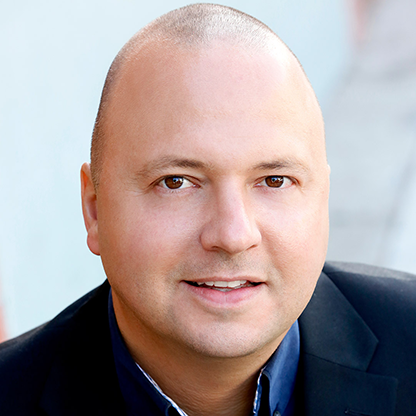
Bruno Munger
Telestream
Topic: AI-Assisted Media Understanding
AI assisting with with contextual understanding with production and streaming media, what are some of the technologies and solutions to help with this.
Bruno is a Product Manager at Telestream, where he leads product strategy across the Encoding.com (EDC) platform, Vantage AI (AI Vision, AI Speech, AI Autoframe/Moments), the Stanza captioning platform, Qualify QC, and the Telestream AI Engine. His work spans the full product lifecycle from roadmap definition and feature development to technical support escalation, QA investigation, and customer communication, bridging engineering, QA, and customer facing teams to ship reliable, high quality media processing and AI driven tools.
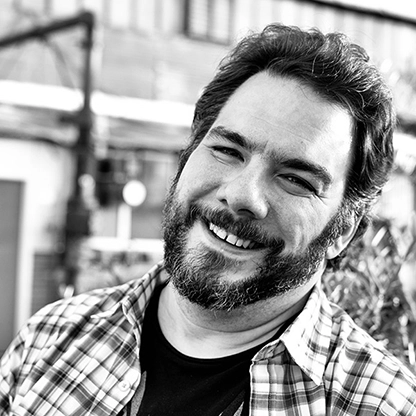
Juan Cabrera
LightBenders
Topic: AI agents in the real Post-Production world: Chat/Desktop/Code
Sit with me and see how AI runs alongside a boutique color and finishing studio in LA: when to use chat, desktop, and coding assistants, and how to connect them so they work as one crew. We’ll go through real examples from recent projects: tracking leads, building an assistant’s “brain”, running scripts and parsing files, and turning messy client feedback and documents into usable data. Learn the practices that deliver accurate, efficient results, what to avoid, what is production-ready versus hype, and where a human still needs to be in the chair. Leave with my setup interview prompt so you can build your own AI environment that knows exactly what you do.
Juan Cabrera is the Founder and Supervising Colorist of LightBenders, a Los Angeles color and finishing studio whose credits include Ripley and The Alienist: Angel of Darkness. A former DI Supervisor at Bad Robot, he builds the studio’s own tools, from pipeline scripts to AI agents, so a small senior team can deliver facility level work at boutique cost. In 2021 he became the first Spanish colorist invited to join the ASC as an Associate Member.
Topic: Understanding AI Agents and Taking Control of Your Agentic Worklows
(co-moderated by Marco Rota, Arxio Group & Mark Turner, Entertainment Technologists Inc)
In this session we’ll discuss what are Agents, sub-agents and agentic workflows? How can they be managed effectively with sandboxes of data, applications, context and guardrails? And then we’ll show some real examples of insights, tasks and processes that can be run by agents. But our moderators are real humans so this will be an interactive ‘there are no dumb questions’ session so start here to understand the agentic future and why it is so exciting, and scary, at the same time!
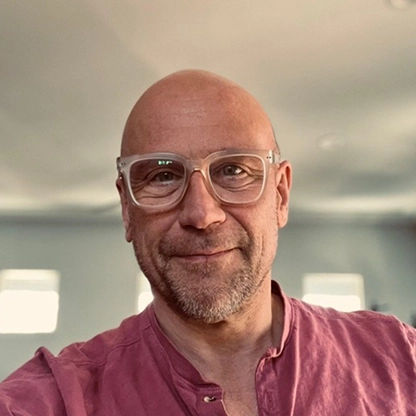
Marco Rota
Arxio Group
Marco is the founder of Arxio Group, a fractional advisory and software company based in Reno, Nevada. He helps companies solve problems with AI: defining the goals, the initiatives that deliver them and the risks that stand in the way. He has spent 25+ years working at the intersection of business and technology for Microsoft, SAP, Lumen Technologies, Disney, Paramount, Warner Bros. and Bethesda/Zenimax, including roles as Global Field CTO for Media & Entertainment at Microsoft and VP of Connected Ecosystems at Lumen. When he isn’t in his mad laboratory working with AI and bending it to his will, he is out taking photographs and writing a book that will probably never be published.
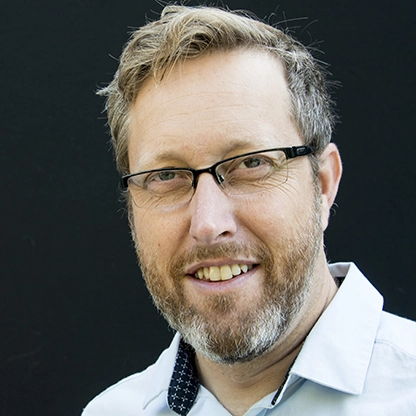
Mark Turner
Entertainment Technologists Inc
Mark Turner is President, Entertainment Technologists Inc, a bouqtique consulting and technology development company with a focus on cloud, workflow innovation and the application of AI. Mark also serves as Program Director, Production Technology for Movielabsand the Director of the Sports Video Group’s AI Innovation Lab. Mark was the lead author onthe MovieLabs 2030 Vision for the Future of Content Creation and now actively works with the studios and MovieLabs to evangelize the Vision, build transformative technologies that support it and develop standards and systems to accelerate adoption. At the SVG AI Lab, Marks’ team coordinates the application of AI across live production, digital experiences and agentic powered workflows in Live Sports across Europe and North America. Mark is also the founder of multiple media technology companies including Ryff, Samsyn, Xinsere, NearlyMe and MediaShippers.
In Mark’s 30 years in the global media industry he has always been at the intersection of technology and business models and develops strategies to help organizations through periods of change. Mark has worked across product management, to sales, strategy, business development and partnerships for start-ups to multi-billion corporates including Microsoft, Walt Disney Studios, Technicolor, Skywalker Sound, CoreWeave, Levels Beyond, Signiant, Wasabi, Tech Mahinda, RSTOR, NEP Virtual Studios, Coresite, Dolby Laboratories, BT Media & Broadcast and Eutelsat.