


Welcome Young Entertainment Professionals Class of 2026
By Kiera Williams
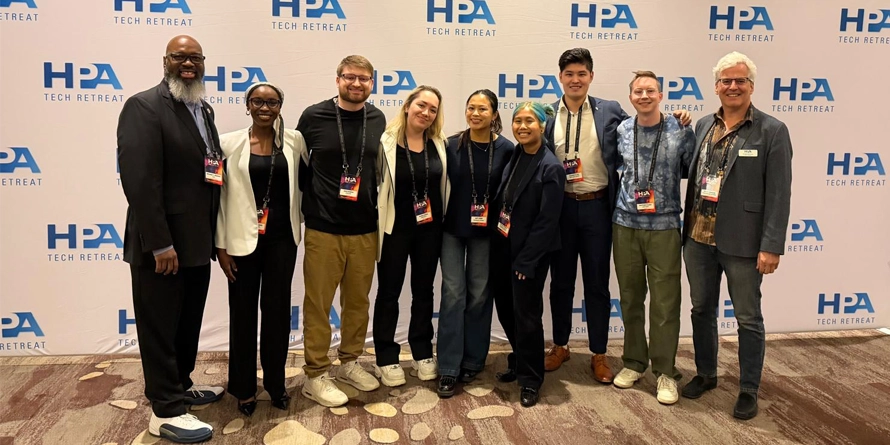
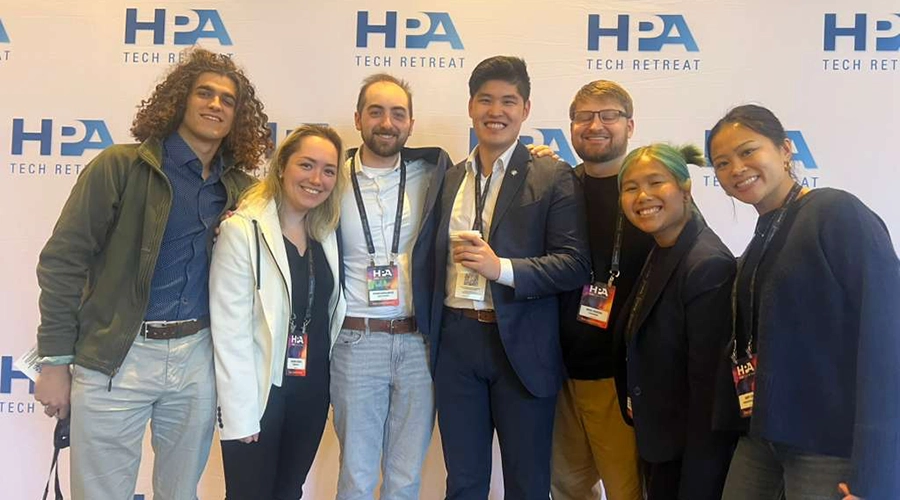
Every year, a new group of emerging media and entertainment professionals steps into the HPA community — curious, talented, and ready to grow. This year is no different. Meet the YEP Class of 2026.
But before we get into introductions, let’s talk about where they started.
First Look: YEP 2026 at the HPA Tech Retreat
The HPA Tech Retreat is unlike most industry events. World-class engineers, technologists, executives, and creatives step away from their daily routines to have the kinds of conversations that don’t happen anywhere else — rigorous, specific, and unfiltered. The ideas don’t stay onstage either; they spill into roundtables, dinners, and late-night conversations that keep going long after the sessions end. For a first-timer, that can feel like being handed a firehose. For this cohort, it felt like exactly the right place to begin.
Nicolas “Nico” Cantrell, a newcomer to the industry, put his finger on what makes the retreat different from other professional gatherings. When you ask an expert about their work in most contexts, you get their elevator pitch, polished and generalized. At the HPA Tech Retreat, that’s not what’s on offer. The conversations move at peer level, expert to expert, with the kind of specificity that only comes when a room assumes everyone in it already knows the basics.
“There is something uniquely valuable about the depth and specificity that comes from expert-to-expert dialogue”
For someone still finding their footing, being trusted with that conversation is its own kind of education.
Fatima Kunduri appreciated that depth without feeling buried by it. The retreat’s single-track format — one presentation at a time, everyone in the same room — kept the experience grounded. She walked away with a fresh perspective on the evolving media landscape and called out “Every Company is a Media Company” as her favorite session, noting that the insights from several panels were ones she could bring directly back to her work. “It was energizing to engage in thoughtful conversations with other professionals,” she said and that energy, the kind that builds when smart people are given real space to talk, was something the whole cohort seemed to carry out of the room.
Ryan Wallace came in with more conference mileage than most YEPs — NAB, the SMPTE Media Tech Summit, Production Summit — but found the HPA Tech Retreat offered something the others don’t quite replicate. His highlight reel included Joshua Pine’s “Annual Report from the Complaint Department,” a well-earned crowd reaction to ffmpeg support in the ACES and OpenColorIO updates, and a session on emerging creator workflows that acknowledged the growing wave of independent talent reshaping production. But the session that landed hardest was personal: “Dreaming of What the Future Holds In Our Lifetime,” presented by former YEPs to open the conference. For Ryan, it reoriented something.
“In present times that feel like we’re moving a mile a minute, thinking of the future seems like we can only think of tomorrow.”
Seeing people from this same program already leading that conversation made the program feel less like a starting line and more like a continuum he was now part of.
Conversations Around Technology and Creativity
If there was one thread woven through nearly every session at this year’s retreat, it was AI. And this cohort engaged with it honestly and the kind of nuance the topic desperately deserves.
Mike Bender showed up with his position already formed. By his own accounting, he walked in a 3 out of 10 on the AI acceptance scale — closer to “ban everything” than “let it take over.” He left somewhere around a 5, pushing 6. What shifted him wasn’t a single argument but an accumulation: a presentation by Secret Level, whose three-minute fully AI-generated short film was, by Mike’s admission, about 70% indistinguishable from traditionally produced work. What struck him most was realizing he was watching it wrong.
“I found myself critiquing the shot and how it affected the story instead of the AI content and how it looked. Usually it’s always the opposite critique.”
That shift from scrutinizing the tool to scrutinizing the storytelling is one the industry can stand to make. Multiple presenters framed it through the lens of Detroit’s auto industry: a cautionary tale about an ecosystem that refused to adapt until it was too late. The warning to Hollywood wasn’t subtle. Generative AI is lowering the barrier to content creation, and a flood of it is already here. But as Mike noted, “taste is scarce.” Anyone can push a button. It still takes a human — with judgment, with vision, with something to say — to make something worth watching.
HPA President Renard T. Jenkins offered the frame that perhaps best settled the anxiety underneath all of it. Hollywood, he argued, is not a place — it’s a concept. “That’s why places like Bollywood exist.” The concept, wherever it lives, doesn’t die.
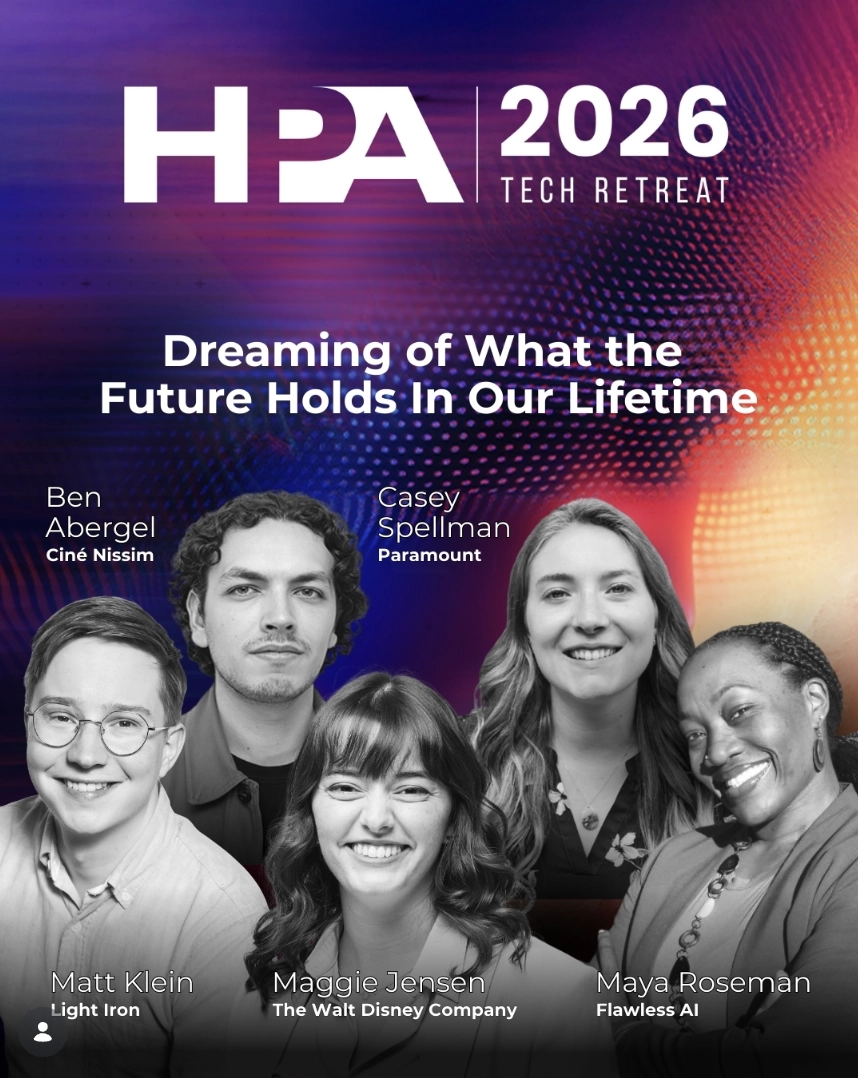
Amy Chew arrived at the same conversation from a different direction. At the YEP Panel, speaker Ben Abergel offered a provocation that stayed with her: “If there is a piece of tech that you’re interested in, try to use it for something it wasn’t meant to be used for.” At first, it’s permission to play, but Amy heard something more:
“It made me think about how much value comes from the creative process when we make mistakes or think outside of the box — something that artificial creativity is not designed to replicate. It makes me think: what are we losing when we use AI to automate the processes we use to create?”
That’s not a question with a clean answer. But the fact that it’s being asked earnestly, and by someone early in their career, says something about who this cohort is.
What They’re Here For
The retreat was the opening act. What comes next is the year — the mentorship, the events, the slow work of building relationships that actually mean something.
For Fatima, that’s the part she’s most looking forward to. She’s thinking less about the programming calendar and more about the people: peers in the cohort, leaders across the HPA ecosystem, the conversations that happen at the edges of formal events. “HPA sits at the intersection of technology and content,” she said, “and I am looking forward to gaining more insight into how technology and partnerships intersect to drive scalable growth.” That intersection is exactly where YEP lives — and it’s why the community draws the people it does.
The goal is not just exposure to the industry, but participation in it.
Welcome to the HPA Family!
To the YEP Class of 2026: you’ve already shown up with curiosity, candor, and something the industry always needs more of: honest perspective. The conversations you’re already having, the questions you’re already sitting with, the moments from that retreat you’re still turning over? That’s the work. And it’s already begun..
If you see any of our YEPs around at events, on set, in the halls of your company, introduce yourself. Say hello. You’re meeting someone who’s doing the thing.
Stay tuned for more from YEP 2026 throughout the year.
The Young Entertainment Professionals (YEP) program nurtures the development of talented individuals at the start of their media and entertainment journey with mentoring and education, introductions to industry leaders, invitations to events, and access to resources that will further their careers. To learn more about sponsoring this program, contact sponsorships@hpaonline.com.